The Stoic Awakening

They thought I was finished, but a person with nothing left has nothing to lose. The villain arc begins. #Cinematic #Stoic #Betrayal #Transformation #VillainArc
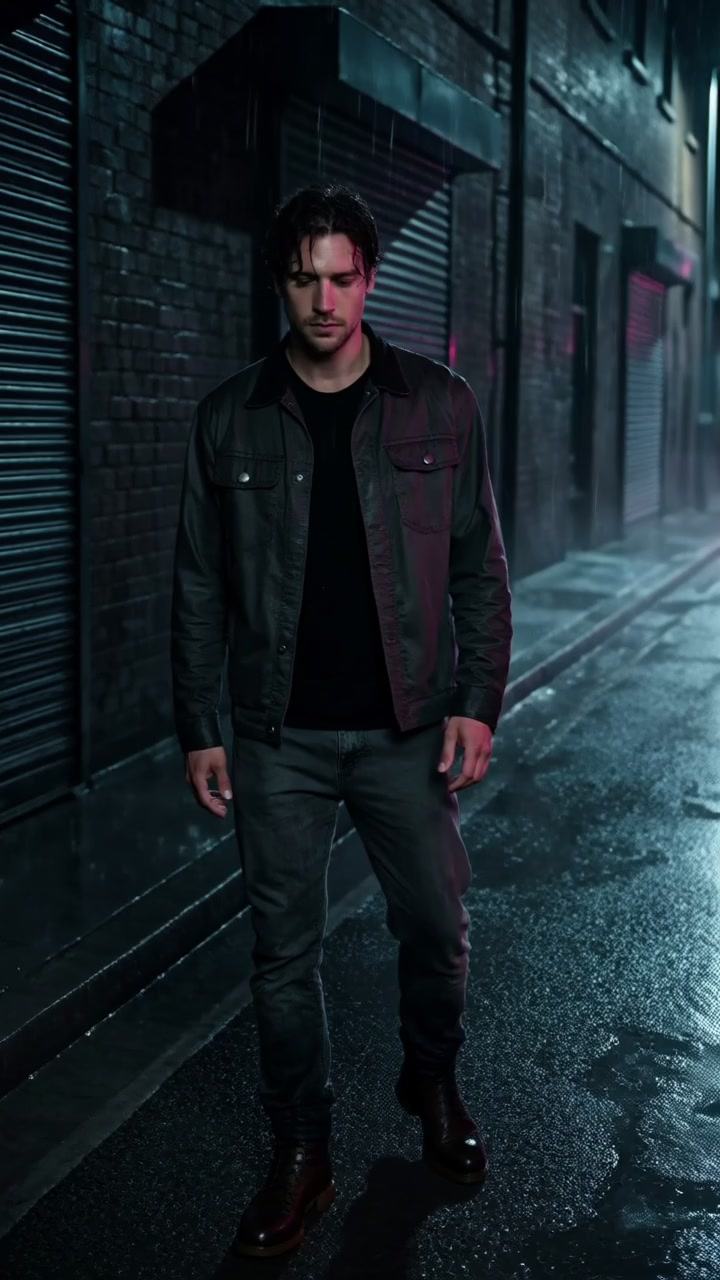
The night air is thick, each raindrop drumming out a quiet kind of violence. I see him — Eliot Monroe — rooted on slick concrete, cold neon bleeding into puddles, shoulders slumped, the weight of some unspoken betrayal pinning him there. There's no heroic music, no echo of thunderous rage. Only the heavy, low hum of the city, and that raw, emotional track that seems to echo every fragment falling from his eyes.
I can almost taste the chill, the iron tang of loss—his head bowed, rain tracing invisible scars across his cheek. For a second, he's not even moving, almost as if time itself wants him to feel the blow a little longer. There is something intimate, almost intrusive, in watching a man at his lowest.
Then it happens. The music swells, slow and unrelenting. His breath steadies. Subtly, his body shifts: the defeated hunch straightening, sorrow leaking out until only something cold and sharp remains. Eliot raises his head, features smoothing into icy clarity—a slow exhale of everything soft. Now he’s staring through the camera, through me, with that look—impenetrable, a fortress built from what’s been stripped away.
Rain keeps falling. But it doesn’t matter anymore. In that final, defiant close-up, you realise: there’s nothing left to lose, and nothing left that can touch him. Call it a villain arc, call it self-preservation—every survivor knows this glare. All that pain transmuted into a kind of power, untouchable and unapologetic.
If you’ve ever tasted that moment—when hurt gives way to steel—you’ll recognise yourself here. Let the music drive you through. Let that stare remind you: fear belongs to those still clinging to what’s gone. Me? I’ve learned to walk on wet pavement, unafraid of the storm.
Tip: Use this prompt in Reela'sAI Video Generator to easily create your own unique version in minutes.